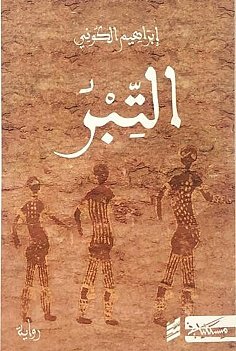
Ibrahim Al-Koni
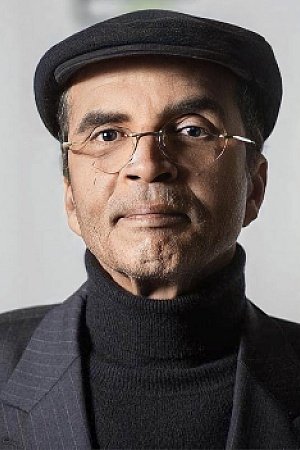
The Libyan and Tuareg writer and intellectual Ibrahim Al-Koni was born in Ghadames, Libya, in 1948. He studied in Ghadames between 1956 and 1957 and then moved to the Edri ash-Shati School in the oases of southern Libya after a wave of desertification hit the Sahara due to the French nuclear explosions that lasted from the mid-1950s until the mid-1960s. In 1963, he moved from Edri Al-Shati Primary School to Sebha Central School and then to Ali bin Abi Talib Preparatory School in Sebha in 1964. In 1970, he traveled to the Soviet Union to study literature at People's Friendship University and moved to the Gorky Institute of Literature in Moscow in 1972, where he studied comparative literature, philosophy, and Old-World cultures. He graduated from the institute in 1977 with the collection of stories Praying Beyond the Five Times, which was translated into French and published in Arabic in 1974.
Al-Koni began his career early, working at the Ministry of Social Affairs in Sebha in 1965, and in 1966, he worked as a literary editor for the newspaper Fezzan, which was later renamed Al-Bilad after the wave of political reforms that changed Libya from the "United Kingdom of Libya" to the 'Kingdom of Libya'. In 1968, he participated in the first Libyan literary conference held in Tripoli with a lecture on Tuareg folklore. In 1969, he moved to Tripoli to work as a literary editor for Al-Thawra newspaper after the 1969 coup, which combined the three government newspapers into one. From the late 1960s to the early 1970s, he contributed articles and studies to newspapers such as Al-Hadirah, Olympics, Al-Maidan, Freedom, Science, and Revolution, as well as to weekly magazines like Libya Al-Haditha, Majalat Al-Ezeaa, Al-Mara'a Al-Usbue, Al-Thaqafii, Al-Fajr Al-Jadid, Bayrut Al-Masa'a, and Al-Kefah Al- Arabi.
In 1970, Al-Koni published his first book, The Revolutionary Thought Critique Symposium which was immediately confiscated. In the same year, he issued the book The Saharan Revolutions, which was also confiscated. His first fictional work was published in Russian in 1972 and translated into all the languages of the Soviet republics. In 1973, he contributed a lecture on 'Ideology and Creativity' to the Libyan Literature Conference in Tripoli. In 1974, he published a book of critical studies titled Notes on the Forehead of Exile and his collection of stories Praying Beyond the Five Times. In 1976, he participated in the activities of the Asia-Africa Writers Conference held in Tashkent, and in 1977, he participated in the Arab Writers Conference held in Libya with a study on The Problem of Philosophical Vision in Contemporary Arabic Literature. In 1978, he became a resident delegate for the Libyan-Polish Friendship Society in Warsaw, and in 1981, he founded the Polish-language magazine Friendship, the first European-language magazine focused on Arab-Islamic culture and its impact on European civilization.
In 1982, his novel The Atoms of Sand that Beat the Drums was published in English in the anthology of contemporary Arabic stories, and in the same year, his story A Dose of Blood was published in English and Turkish. In 1986, Al-Koni returned to Moscow to work as a science correspondent for the Center for Historical Studies of the Soviet Academy of Sciences. In 1987, the Soviet Raduga anthology included his story A Dose of Blood.
In 1993, Al-Koni moved to Switzerland to work as a media consultant at the Libyan Embassy, allowing him to devote more time to literature. In 1995, his novel The Bleeding of the Stone was published in German, marking the beginning of translations of his novels, stories, and prose into more than 40
languages. In the same year, he participated in a seminar in Stauffacher, Bern, on The Bleeding of the Stone. From 1996 onwards, seminars on Al-Koni’s work have been held across European, Asian, Middle Eastern, and North African cities.
In January 1996, Al-Koni participated in a symposium on Mediterranean culture with Ismail Kadare, organized by the Center for World Cultures. In 1997, a symposium on his work was held in Paris at the initiative of the Union of European and American Translators in partnership with the Sorbonne University and the Arab Public Institute. The same year, a symposium on his novel Gold Dust was held in Bern, Switzerland, and another in Basel. His novel The Night Grass was published in German that same year. In 1998, Al-Koni was selected as a member of the Swiss Presidential Delegation, representing foreign writers in Switzerland, at the Frankfurt International Book Fair’s Golden Jubilee, where Switzerland was the guest of honor.
In 2001, his novel The Magians was published in German. Between 1998 and 2010, Al-Koni participated in the first, second, third, fourth, and fifth conferences of the Arabic novel in Cairo. In 2011, a global symposium on his work was held in Washington, D.C., sponsored by Georgetown University. In 2012, he participated in the Dorian Symposium of World Literature in South Africa and later moved from Switzerland to Spain. In 2017, he participated as a guest of honor at the World Literature Festival in Tbilisi, Georgia, following the publication of his novel The Bleeding of the Stone and Gold Dust in Georgian.
Since then, Al-Koni's fiction, visionary works, and philosophical publications continue to be released in both Arabic and foreign languages. He regularly participates in Arab and international cultural events. His literary works are included in university curricula across Europe, America, Japan, the Middle East, and other parts of the world. His literature has been the subject of dozens of doctoral theses, master's degrees, and academic studies in various languages. Numerous seminars on his works have been held in Europe, America, Asia, Africa, and the Middle East. He has also participated in numerous cultural events, literary festivals, and academic symposiums across all continents, and this made him one of the most influential Arab writers of his time.