
Anubis: A Desert Novel
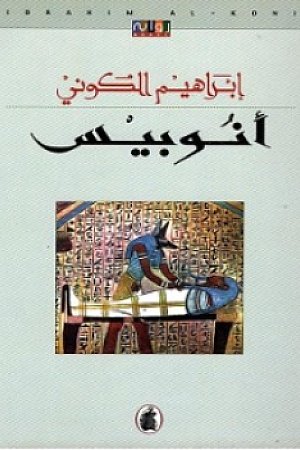
Overview
“We must kill the Father to find the Father. We must kill the Father to find the Father”.
Summary
Anubis is a gripping novel that skillfully blends myth with modern narrative. It follows Anubi, whose name in the Tuareg language, as in ancient Egyptian, means ‘the bastard’, as he embarks on a quest to find his father. Anubi forgets that desert norms forbid searching for the father, as it is believed to bring evil. Throughout his journey, his mother is killed. Anubi, bearing guilt for his involvement in her death, is consumed by remorse. A mysterious woman informs him that the man who murdered his mother on the tombstone of their ancestors is a priest. After a brief love affair with the mysterious woman, Anubi sets out on another journey, this time seeking vengeance for his mother’s death. The priest confesses to the murder, and Anubi kills him. Later, Anubi discovers that he not only killed his mother but also his father and committed incest with his sister.
Divided into three thematic sections and a meta-narrative footnote, the novel examines themes of guilt, redemption, and myth. Anubi’s life cycle is marked by his unconscious commission of three sins: killing his mother, killing his father, and incest. Here, Anubi’s fate mirrors that of Anubis in Egyptian mythology. Anubis was the love child of Osiris and his brother’s wife and later became the guardian of the underworld. Unlike Anubis, Anubi cannot seek refuge in the underworld, as there is no underworld in the desert norms. There is only the world of the obvious and the world of the hidden. Anubi finds his refuge in the hidden world, where he will atone for his deadly sins.
Anubis is not merely a source of raw material for myth; it stands as a legend in its own right. The narrative takes readers through the dramatic story of Anubi, the ancestral figure of the Tuaregs and ancient Libyans, subtly drawing a comparison with Anubis, the ancient Egyptian god and guardian of the underworld.
This parallel not only highlights the cultural and symbolic significance of Anubi but also deepens the exploration of themes related to heritage, identity, and the spiritual realms of ancient civilizations. Saeed Al-Ghanmi discusses this mythical dimension: “With Anubis (2002), Al-Koni entered what I call the 'lost dimension' stage of a novel. It is a stage where the novel annihilates actual Time, and the symbolic Time becomes the vehicle of the novel's dynamics and theme.”
In this work, Al-Koni’s narrative mechanism is to construct parallel texts, mostly borrowed from a mythical or sacred ones, and these texts serve as a narrative blueprint for the novel. Al-Koni's narrative flows in tandem with the narrative of the mythical/sacred texts but without imitating it. It approaches but never conforms.
Why Read This Book
Al-Koni's Anubis masterfully weaves ancient myth with contemporary existentialism, offering a profound exploration of guilt, redemption, and the interplay between myth and reality. The novel’s innovative structure and rich thematic content make it a compelling read for those interested in mythological narratives and modern storytelling.
Key Themes
Myth and Reality
The novel explores the power of ancient stories to shape the human experience.
Guilt and Redemption
Anubi's quest for redemption is central to the narrative, as he grapples with the consequences of his past actions.
The Human Condition
The novel delves into universal themes such as love, loss, and the meaning of life.
The Power of the Desert
The desert landscape is a powerful symbol, representing both isolation and spiritual enlightenment.