
Gold Dust
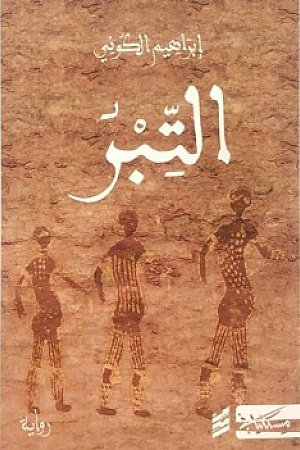
Overview
“Few contemporary stories achieve the feat of keeping the reader in suspense before the inexorable drama that unfolds and penetrating his innermost core: Gold in dust, the miracle works with deceptive simplicity.” Juan Goytisolo
Summary
Gold Dust is deemed notable in Arabic literature for featuring an animal in a role as central as the other human characters in the novel. The novel explores the intricate relationship between Ukhayadd, the son of a Tuareg sheikh, and his white, slender camel, Mehari. Set in the Western Desert within a Tuareg tribe, it tells the story of the deep and passionate bond that develops between Ukhayadd and Mehari, which begins in Ukhayadd’s childhood and grows into a profound spiritual connection during a grueling journey marked by pain and mutual suffering. Their fates become intertwined, culminating in a shared destiny.
The novel tackles themes of sin—particularly in its mystical dimension—and freedom, illustrated by Ukhayadd’s desperate attempts to heal Mehari despite his poor resources. His relentless efforts test his patience and faith, leading him to sacrifice everything.
In Gold Dust, Al-Koni celebrates the spiritual over the material and upholds the sanctity of desert traditions, warning that violating these traditions leads to death. The title Gold Dust reflects the symbolic weight of gold in the desert culture, where it represents corruption, betrayal, and disloyalty. Critic Saeed Al-Ghanmi notes, “In the desert, gold signifies the annihilation of its essence, representing the highest image of civilization and urbanism, akin to creating a ‘bank’. Consequently, gold must be eradicated, its symbolic values condemned and replaced by the sacred values of desert life. If gold is the capital of civil society, then sanctity is the capital of desert society. This is the central theme of Al-Koni’s Gold Dust”.
Al-Koni enriches his narrative by starting each chapter with quotations from religious texts, myths, and mystical sayings. He skillfully incorporates stories such as Adam’s and Greek myths like Pandora’s Box, adapting them to the desert context, which lends the novel its universal appeal.
Why Read This Book
Gold Dust is considered one of Ibrahim Al-Koni’s most significant works. It was featured in UNESCO’s “Kitab Fi Jarida” project, distributed for free with various Arab newspapers (Issue 51, January 2002), and won the Japanese Committee Award for Translation in 1997.
Key Themes
Tuareg Culture
The novel provides a rich and immersive exploration of Tuareg traditions, beliefs, and the harsh desert landscape.
A Philosophical Exploration
Al-Koni delves into profound philosophical themes, including the nature of sin, redemption, and the conflict between material and spiritual values.
A Symbolic Narrative
The novel is filled with symbolism, with the camel- Mehari- serving as a powerful metaphor for the Tuareg people's resilience and spiritual connection to the desert.
A Critique of Modernity
Al-Koni critiques the destructive impact of modernity on traditional cultures, highlighting the importance of preserving cultural heritage.
A Spiritual Journey
The novel explores the spiritual dimensions of the Tuareg people, their beliefs in fate, destiny, and the power of the divine.