
The Night Grass
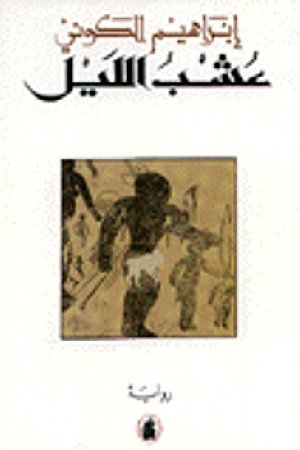
Overview
N/A
Summary
In The Night Grass, Al-Koni explores the devastating consequences of violating the moral code, which he posits as the primal law of the universe. The title itself is rich with symbolism, drawing the reader into a world steeped in mythology, laden with secrets and profound meanings. Al-Koni approaches this mythic world with a simplicity and economy of characters that allows the reader to penetrate his universe and comprehend its deeper meanings, symbols, and signs within the context of mythology, language, and the history of the desert and its tribes.
The novel tells the story of Wan Taihai—a man shrouded in darkness according to his tribe—who commits the ultimate transgression by marrying his own daughter and fathering a child with her. The narrative begins with a dramatic event where a young woman defies ancient customs by insisting on exposing hidden truths, leading to a series of escalating events that culminate in one of Al-Koni’s recurring themes, that is, the killing of the father, and in this work, Wan Taihai is killed by the daughter he fathered with his daughter.
Kamal Al-Rayahi, reflecting on the theme of patricide in Al-Koni's works, notes how the author uses the tool of death to restore the cosmic balance: “In this novel, Ibrahim Al-Koni does not only delve into the misery of human existence …. but also portrays the shedding of the other's blood as an existential duty to affirm one's place in the universe. In this narrative, Man's existence hinges on the elimination of his doppelganger, wherever he may be—a defense of his centrality.”
In The Night Grass, Al-Koni masterfully weaves together myth, psychoanalysis, and philosophy to serve his narrative purpose, incorporating the key elements of the Oedipal Trinity: the son, the father, and the code. As in all narratives involving the Oedipus complex, the father is fated to be killed, but here the act is committed by the daughter. Unlike in the traditional Oedipal narrative, however, the daughter does not kill her mother to possess the father; instead, she kills the father because he is her lover's rival and an arrogant tyrant.
As with much of Al-Koni’s work, The Night Grass returns to his central existential inquiry: “What is Man?” This novel continues to explore this question through various philosophical and Nietzschean lenses. Al-Koni expresses this exploration through the words of a character who embraces his own blindness: “I am happy with my blindness, because it helped me see what you do not see and live, not the way you live.”
Why Read This Book
This book unlocks a mythological world where deep symbolism and moral questions are explored through the story of Wan Taihai and his sins. The reader will come across taboo subjects and the Oedipal complex, as the novel dissects the nature of human existence, the consequences of violating moral codes like patricide, and the struggle for cosmic balance.
Key Themes
Myth and Symbolism
The novel is rich in symbolism and draws inspiration from ancient myths, particularly the Oedipal complex.
A Philosophical Exploration
Al-Koni raises profound philosophical questions about human nature, morality, and the consequences of transgression.
A Tragic Narrative
The story explores the tragic consequences of forbidden desire and the destruction of the moral order.
A Critique of Patriarchy
The novel challenges traditional patriarchal structures and explores the power of female agency.