
The Homeland of Heavenly Visions (Anthology, Legends)
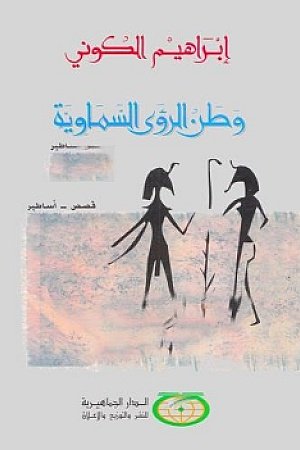
Overview
“The desert has always been the home of heavenly visions.”
Summary
With this evocative line, Ibrahim Al-Koni opens his collection of six stories: The Homeland of Heavenly Visions, The Trap, Al-Barzakh, The Path of the Drinking Place, The Road to Wuw, and A Different Biography of Wantheet. In these tales, Al-Koni explores the profound interrelationship between the desert’s elements—plants, animals—and humanity, examining the conflicts, destinies, limitations, freedoms, and sense of belonging that define the human experience.
This collection is imbued with a mystical quality, as Al-Koni delves into the secrets and anxieties of contemporary humanity, seeking to purify the human soul from its arrogance and brutality. In 2009, this work won the prestigious Mondello International Prize for Literature in Sicily, Italy.
In the six stories, Al-Koni masterfully employs the symbolic and legendary aspects of the desert’s environmental elements, such as the al-Tarfas plant and the al-Waddan animal. Japanese academic Nobu Aki Notahara comments on the symbol of al- Tarfas plant in this work: “Ibrahim Al-Koni elevates this plant to the level of myth, imbuing it with supernatural meanings and connotations. The desert man who tastes it even once becomes addicted to it for the rest of his life.”
In Al-Koni's works, this plant holds a secret symbol of life in the desert, a force that draws desert dwellers to remain in their environment. Its colors and taste, especially after roasting, represent the deep connection between the soul, the land, and the passage of history. In this way, the plant transcends its literal meaning to become a living space where matter, myth, and desert life converge.
Al-Koni also addresses the duality of life and death, themes that, as Notahara notes, haunt the author throughout his works.
In the first story, the protagonist and his son, who have been ostracized from the tribe due to the mother's foreign origins, commit suicide. According to tribal norms, the son is also considered a stranger. This symbolic embrace of death is portrayed as a celebration of freedom— sacred to the desert people. For the desert man, if he cannot become a legitimate member of the free desert society, death represents an alternative freedom and a path to ultimate emancipation. In this context, Al-Koni quotes from Farid Al-Din Attar’s The Conference of the Birds: “There is no happiness for a person beyond annihilating oneself.”
Why Read This Book
In this book, the reader will enter a world where the desert's elements are imbued with mythological significance, and through vivid and evocative narratives s/he will come across the questions of freedom, belonging, and the spiritual journey of the soul, challenging him/herself to consider the deeper meanings of life and death.
Key Themes
Desert Mysticism
Al-Koni's stories are steeped in the mystical and spiritual traditions of the desert, exploring the profound connection between humans and the natural world.
A Philosophical Exploration
The collection explores the timeless themes of life, death, freedom, and the human condition.
A Cultural Tapestry
The stories offer a rich tapestry of Tuareg culture, highlighting their unique worldview and their deep-rooted connection to the desert.
A Symbolic Narrative
The desert landscape and its inhabitants are imbued with symbolic meaning, reflecting the complexities of human existence.