
God's Camel
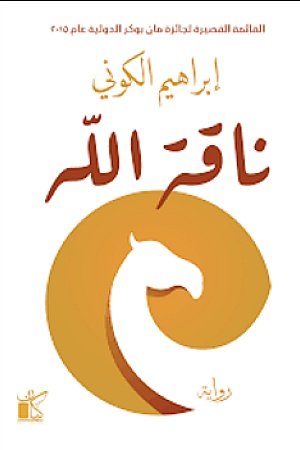
Overview
“The homeland is the door leading to the homeland, to the homeland lost within the homeland.”
Summary
God's Camel is a philosophical novel where imagination and reality intertwine. It tells the story of the Tuareg people, whose homeland is lost due to conflicts and their aftermath. The novel portrays the plight of the Tuareg during their time of wandering, with a central focus on the symbolic relationship between a camel named 'Tamalalt' and her owner, 'Assis'. Despite Tamalalt’s yearning for freedom and her fierce desire to return to the place from which she was taken, she is torn between her love for the desert and her deeper love for freedom. Through the tragic tale of the camel, Al-Koni draws a parallel to the dispersion of the Tuareg people themselves.
Assis converses with the camel, sharing his thoughts and ideas, and imbuing her with human qualities. Yet, despite their bond, Assis is conflicted—haunted by the betrayal he feels he has committed against Tamalalt, who, to him, represents his homeland. He rationalizes his actions with unconvincing excuses, telling himself that he acted they way he did to avoid losing her.
Through Assis’s introspections, Al-Koni explores the theme of revenge, reflecting on how “there is no antidote to the bitterness of humiliation except revenge”, while also questioning its efficacy and the absence of justice in the world. Assis admits that he fled the prison of his homeland in search of freedom, only to discover that accepting imprisonment—or even death—within one’s homeland is the true path to freedom. He emphasizes the power of hope, particularly the hope of reclaiming the lost homeland, which prevents him from succumbing to madness, as was the fate Tamalalt.
In God's Camel, Al-Koni digs deep in the mysteries of the desert and the significance of the camel in the life of desert dwellers. He suggests that pursuing the camel is akin to a 'search for God'. The tribal leader clings to the camel because it is not only an amulet, but also a symbol of identity—the final umbilical cord that ties him to his homeland: the desert. Al-Koni also explores the theme that while everything in the desert is perishing, one thing endures: thirst. Everything in the desert has an antidote, except for thirst, for it is the sky alone that provides it.
Why Read This Book
This book explores the rich culture and traditions of the Tuareg people, raising profound questions of identity, freedom, and belonging, and connecting with the human spirit through the poignant tale of Assis and Tamalalt. The novel invites readers to reflect on the tension between tradition and modernity, and the consequences of displacement and loss.
Key Themes
Tuareg Culture
The novel offers a poignant exploration of the Tuareg people's nomadic lifestyle, their deep connection to the desert, and the challenges they face in the modern world.
A Philosophical Exploration
Al-Koni delves into profound philosophical questions about identity, freedom, and the human condition.
A Symbolic Journey
The camel, Tamalalt, serves as a powerful symbol of the Tuareg people's resilience and their enduring connection to the desert. Her journey mirrors the struggles and aspirations of the Tuareg nation.
A Critique of Modernity
The novel offers a critique of the destructive impact of modernity on traditional cultures, highlighting the importance of preserving cultural heritage.
A Search for Meaning
The characters in the novel are constantly searching for meaning and purpose in their lives, often turning to the desert for answers.