
The Season of Land Sharing: A Biography in Biographies
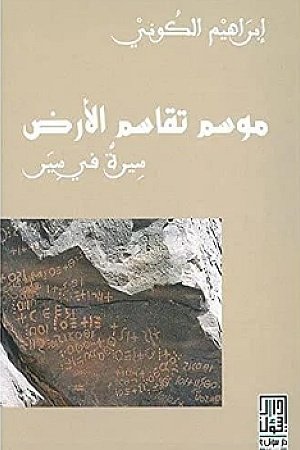
Overview
“He will bite his fingers in regret, /whoever did not run to Libya/ to claim his share of its rich land, /in the season of land sharing.”
Summary
Ibrahim Al-Koni opens The Season of Land Sharing: A Biography in Biographies with a prophetic excerpt from Herodotus's Book of Histories. This ancient prophecy, issued by the oracle of the Temple of Delphi, urged the Greeks to invade northern Libya. By invoking ancient historical events, Al-Koni addresses contemporary Libyan and Arab issues such as violence, migration, invasion, and the quest for freedom. He does so with his characteristic literary style, skillfully blending symbols, historical references, and a fusion of fiction with truth, myth with reality, and the past with the present.
The novel centers around a debate between the leader of a tribe and a mysterious woman. They argue about the right to settle for more than forty days, a direct violation of the established norms of the desert and the tribe. The leader explains that if he were to do so, he would be forced to give up the leadership of the trib. This heated debate reveals the deeper conflict between the fixed and the evolving, between tradition and modernity. Academian Sabri al-Hafiz reflects on Al-Koni's portrayal of the desert’s logic: “The wisdom and logic of the desert are absolute and uncompromising. Every attempt to interpret them is a form of blasphemy, stripping away any hope of success.”
In this novel, Al-Koni delves into the philosophical question of the human lust for ownership, which he views as the root of all evil and suffering. He writes: “What harm is there if Man denies the sinful lust of ownership and instead welcomes every newcomer with a song? This newcomer is not a guest but a rightful owner of a land—until freedom lures him away. And when nostalgia overwhelms him, he returns with a weeping heart, seeking forgiveness from the motherland and his people. Is not love the only miracle that can turn today’s enemies, frantically bent on annihilating each other, into brothers of a distant yesterday?”
Why Read This Book
The book is a historical and mythological narrative that explores the deep philosophical questions of ownership and freedom. The reader will delve into the conflict between tradition and modernity, as the novel examines the consequences of change and the destructive nature of unchecked ambition. Through its rich symbolism and allegorical storytelling, The Bleeding of the Stone offers a profound exploration of the human condition and the potential for reconciliation in a world marked by conflict and change.
Key Themes
The Clash of Cultures
The novel highlights the tension between the nomadic lifestyle of the Tuareg and the sedentary lifestyle associated with modern society. Al-Koni explores the consequences of this clash, including the loss of traditional values and the erosion of cultural identity.
The Corruption of Power
The narrative dissects the corrupting influence of power and the dangers of dangerous ambition. The characters' pursuit of wealth and status leads to moral decay and societal disintegration.
The Power of Tradition
Al-Koni celebrates the enduring power of tradition and the importance of preserving cultural heritage. The novel emphasizes the significance of the desert and its symbolic importance to the Tuareg people.
A Philosophical Exploration
The novel invites readers to reflect on profound questions about ownership, freedom, and the human condition.