“This exquisite novel is destined to win awards and forge deep connections with readers through its rich imagination and unforgettable characters. It is a novel about writing as salvation and therapy for loneliness, written with a wild, astonishing imagination. The stories tell us that life is a vast prison, and humans are pitiable creatures without imagination, without ‘Reem,’ and without the myths passed down from ancestors to descendants. Hani Abd El-Mourid is a unique and distinctive voice, who writes fearlessly like his protagonist.” Mahmoud Abdel Shakour (Literary critic)
“Between the act of writing and freedom, between mint and jasmine, between creativity and mastery, Youssef, Reem, and the world around them, Hani Abd El-Mourid weaves a distinctive fictional universe that draws on the marvelous, magical realism, fantasy, and ethereal glimpses of reality to create a singular, hybrid narrative entity. It carries the stamp of his unconventional creativity, capturing the obscure and the liminal—rarely grasped so vividly—in a world shrouded in mystery and secret relationships only perceptible to an artistic energy seeking difference and venturing into experimental narrative realms. It narrates life through the logic of our search for a renewed vision of it and adding magical touches to our approach with this existence.” Dr. Amani Fouad (Academic critic)
“In the novel, love and writing are intertwined in the protagonist's life, complementary yet haunted by another voice emerging in the narrative's folds; that is the Censor. The author dedicates several pages to this figure under the title 'Pages Inserted by the Censor,' allowing it to chase, besiege, and constrain the narrator under the pretext of protecting characters from the author who controls their fates. Through this axis, the author explores ideas about censorship in its various forms, but Youssef ultimately defeats the Censor, crafting his own myth amid 'the shadows of mint leaves that never wither or lose their scent.” Fayez Allam (Literary critic)
“The novel's structure is remarkably cohesive, in terms of the author's meticulous distribution of roles among the characters' voices and actions. While the father dominates the narrative space as the family's storyteller, expressing his desire for a poet to emerge, the mother occupies the realm of action. She gives Youssef the image from which the narrative takes off: a merging with cats. This is the scene Yusuf later reenacts in his bond with the cat he names Reem or Reema. Just like mint that grows wildly and without order, the text expands in all directions without ever losing its compass.” Dr. Sherine Aboul Naga (Academic critic)
“Youssef was never realistic nor did he embrace realism—this is the enigmatic part of the text that Hani Abd El-Mourid, with the craftiness of a skilled writer, leaves for the reader to shape, as if the reader were a partner in the storytelling. The reader may get involved in the text, becoming not just a passive receiver but an active participant whose imagination fills the gaps the author deliberately left. This is not merely the author's cunning, but a new narrative technique embodied in the fake crime that an astute reader will recognize as not a crime at all. The narrator's subjection to the 'Censor' is none other than Youssef himself, and the 'narrative' is merely his own obsessions laid bare.” Afaf Abdel Muti (Literary critic)
“My overall impression of this novel is that it is a 'biography of consciousness,' beginning with the mythological consciousness of family roots and ending with aesthetic consciousness, passing through the metaphorical consciousness spoken by the family in its penultimate generation.” Sayed El-Wakil (Novelist & critic)
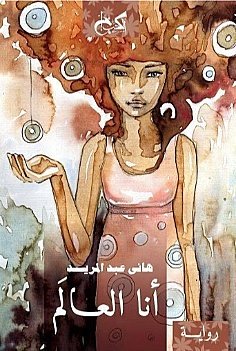
“The novel I Am the World by Egyptian writer Hani Abd El-Mourid explores the world of Egypt's isolated villages, connected to the wider world only through their protagonists' dreams. It tackles themes of oppression, helplessness, repression, and lost hope among Egypt's youth, written with sharp irony and portraying the effects of isolation on young people.” Faisal Abdel Mohsen (Novelist)
“Hani Abd El-Mourid pushes his protagonist, Youssef Abdel Jalil, to reconcile the divine and human conditions. He is the young man who reclaims his family history, recalling its figures, details, and afflictions as a son of this history, while also being the creator who reproduces this extended past in a way that makes him the master of its arrangements and possessor of its will.” Mamdouh Rizk (Literary critic)
“Abd El-Mourid weaves the novel from simple events that mythologize ordinary people, turning the father, a tailor, into a talented actor and social reformer, and the illiterate grandmother into a healer resembling witch doctors in African folklore.” Hanaa Nasr (Writer & translator)
“The bases of I Am the World are not about affirming an idea but mocking ideas. Thus, 'absurdity' appears as another narrative game at its core, where destruction is an unconscious desire for construction; a build-up for another idea about the world and understanding it. Presenting multiple truths makes each truth fluid and easily dismantled. Absurdity, in both its ironic and nihilistic senses, is the foundation of everything in this narrative world and in this 'I' that claims to be the world.” Ahmed Abdel Latif (Novelist & translator)
“This work is not a novel in the traditional sense but rather a narrative poem teeming with characters, memories, and imagined events—an orchestra conducted by the writer himself in a captivating, elegant, and at times sarcastic and playful style.” Dr. Wafaa Farouk Abdel Khaleq (Academic critic)
“The novel is rich with strange, fantastical events and situations where transformations occur in characters in various ways and dimensions, hinting at a distorted reality and a metamorphosis of its beings toward a degenerate existence marked by conflict, gratuitous death, sudden deformation, and an ambiguous fate.” Dr. Mohamed El-Masoudi (Academic critic)
“Myth holds a significant place in I Am the World as the axis around which events revolve, starting with the grandmother who contributes to healing those around her with bizarre remedies—like oil in which she soaked mice or a cat she skinned, cooked, and fed to the sick. The grandmother becomes a link in a family that believes in myths, even if they are strange myths unique to the family.” Dr. Yasmine Magdy (Novelist)
“At first glance, the novel's title might seem to carry hints of narcissism, but alas, it is the narcissism of the wretched who have lost everything and are left only with a Self tormented by bouts of pain and unfulfilled dreams. The title appears as a definitive answer to a question relentlessly posed by a mad reality: 'Who are you?' And the trapped humanity inside each of us screams: 'I am the world.” Hossam Wahban (Poet)
“I Am the World is an experimental novel that reveals a new kind of imagination and a striking ability to craft an alternative, astonishing narrative blending the real, the marvelous, and the dreamlike, the serious and the satirical, into a distinctive narrative fabric. It appears spontaneous yet uncanny, opening onto myths of Pharaonic and ancient folk origins, still embedded in the Egyptian psyche today, alongside myths invented by the narrator himself, filled with familiar and unfamiliar rituals. This novel features an aesthetic and visionary shift in narrative concepts and an innovative capacity to imagine what is yet to come while maintaining ties to what came before.” E'tidal Othman (Literary critic)
“Rare are the novels that deliver both pleasure and astonishment, gripping you until the last page and lingering in your mind and soul long after you close the book. I Am the World by Hani Abd El-Mourid, published by Al-Kotob Khan in Cairo, is a novel – with its world, characters, language, depth, questions, myths, and scenes, that holds you captivated.” Maher Mehran (Poet)
“Through enjoyment and companionship, imaginative play, and dealing with the extraordinary and the wondrous as facts whose laws we do not yet know, the text opens to the unknown, sailing us through stories, while the writer capture us, and we discover with him that stories here rise 'opposite to existence or they are existence' as Hanem, the storytelling mother, said. We also finally discover that Hani Abd El-Mourid aims, as the novel's title indicates, to trap the story in the net of a transparent, tightly woven text, and he succeeded.” E'tidal Osman (Literary critic)
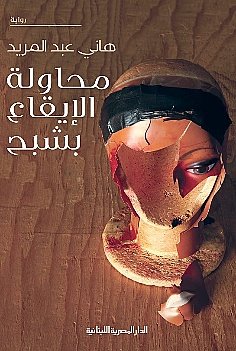
“The novel begins with a game and ends with it, as if Abd El-Mourid is a professional hunter of writing ghosts in a short novel. With one word, he was to open the door of storytelling to become a charm that summons stories, characters, and imagination, not just meanings.” Samar Nour (Novelist)
“Attempting to Trap a Ghost' is a narrative expression of writing that draws inspiration from passion, myth, and rich imagination, in a harmonious narrative structure, by a writer who diligently, consciously, and truly dedicates himself to his narrative project.” Dr. Yousri Abdullah (Academic critic)
“Our popular heritage is full of stories of humans transforming into stone, especially after committing sins like ablution with milk. The attention of young writers to this type of transformation miracles and their utilization of them is considered a retrieval of inherent identity elements." Dr. Salah Fadl (Academic critic)