
I Am the World
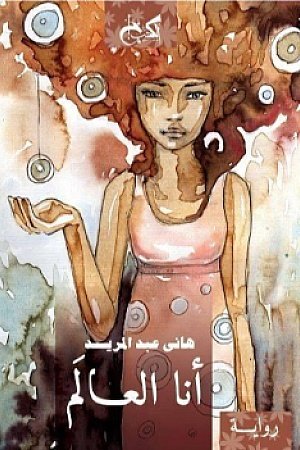
Overview
“Our town is small, lonely like a dot on the edge of the world—dark and desolate, like a place haunted by ghosts. It drives most of its sons away the moment they gain the strength to flee, leaving behind only the elderly and the disabled. What remains are rigid customs and traditions that act in place of laws, making it seem like a ruin deserted by people and inhabited by outdated habits. The number of trees and palm trees is few, and cats, dogs, and livestock are steadily decreasing. Our village is wrapped in darkness, bats, and boredom.”
Summary
I Am the World by the Egyptian writer Hani Abd El-Mourid is a contemporary narrative model that reflects the transformations of novelistic writing in the Arab world within the postmodernist trend, where psychological, symbolic, and mythological techniques intertwine in the text's construction. In this work, the narrative takes a sharp, introspective turn, rooted in the complex inner experience of a troubled protagonist seeking to reinterpret himself and the world around him via stream-of-consciousness and self-confessional techniques.
The novel revolves around the character of "Youssef," the narrator and the protagonist, who is grappled with a severe identity crisis, existential anxieties with childhood memories and ambiguous relationships. His personal journey is marked by intense symbolism, where the details of his life become signs of deep psychological and spiritual fragmentation. In his relationship with "Reem," emotional turmoil and the interplay between instinct and nostalgia emerge, blurring the lines between the tangible and the imagined. "Reema," the cat, appears as a symbol of primal instinct, where traits of femininity, desire, and the subconscious merge, transforming her from a mere creature into a mirror of Youssef's repressed obsessions.
The narrative of the novel is saturated with symbols—such as the cat, the old house, dreams, and illness—all embodying the self's struggle with the internal and mythological heritage. Through characters like the grandmother, who practices spiritual rituals of supernatural nature, and the father and grandfather as symbols of patriarchal authority and a burdensome past, the novel delves into a critique of the inherited cultural and social structures.
On a linguistic and stylistic level, the novel employs stream-of-consciousness techniques, where events unfold through a flow of thoughts and emotions without clear chronological order, reflecting the protagonist's psychological disintegration. The language is dense and poetic, leaning toward metaphor and symbolism, giving the text a philosophical, contemplative quality that transcends the surface story.
The novel clearly belongs to several literary movements, most notably magical realism, seen in its blending of myth and reality; confessional literature, with its emotional and personal honesty; and Sufi symbolism, which questions the relationship between the self and existence. I Am the World is not merely a novel about a story of a person but an excavation of the human self in a moment of existential instability. It revisits age-old questions with contemporary narrative tools—questions of identity, writing, love, and desire—in a world where traditional meanings continually collapse.
This work reflects a profound artistic and aesthetic understanding of literature's ability to dissect the human psyche and interrogate cultural assumptions. With its complex language and open structure, I Am the World is a significant addition to modern Arabic literature, which increasingly turns inward, establishing a new sensibility characterized by openness, anxiety, and existential reflection.
Why Read This Book
This novel offers a profound journey into the self, exploring the protagonist's identity crisis, existential anxieties, and psychological struggles. With rich characters and symbolism, the novel critiques inherited cultural and social structures, raising pertinent questions about identity, love, desire, and censorship. The novel presents a unique and fearless voice that encourages self-exposure and contemplation on freedom through writing.
Key Themes
Identity crisis
Focuses on Youssef's journey through a severe identity crisis as he seeks to reinterpret himself and the world, amid existential anxieties and childhood memories.
Mythological heritage
Explores the self's struggle with its internal and mythological legacy through figures like the grandmother and symbols of patriarchal authority.
The dilemmas of writing
Though not its central theme, the novel reflects a deep awareness of literature's power to dissect the human psyche.
Critique of the cultural and social structures
The novel offers a profound critique of inherited cultural and social norms, questioning societal assumptions.
Love, desire, and the subconscious
The emotional turmoil and the interplay between instinct and nostalgia are evident in Youssef's relationship with Reem.