
Attempting to Trap a Ghost
Overview
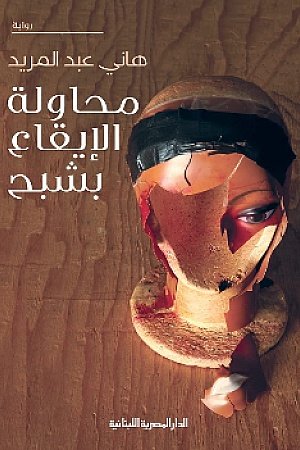
“My life became devoid of pleasure. I had no goal left except for Marzouk and the children to return to their normal selves. I longed to touch them and feel their warm and flesh under my hand. I hated the wet, hollow rubber texture; I detested its pungent smell, as if they were dolls just out of the factory.”
Summary
Attempting to Trap a Ghost by the Egyptian writer Hani Abd El-Mourid is a distinctive example of contemporary Arabic narrative, where fantasy intertwines with reality and myth blends with everyday life. The novel employs a multi-voiced narrative structure and is rooted in the tradition of magical realism, featuring a prominent use of the "story within a story" technique. This makes the work rich in symbolism and elevates it beyond traditional novelistic frameworks, opening up deeper interpretive possibilities.
The plot consists of two parallel and intersecting narrative lines. The first line takes place in a coastal area and tells the story of an ordinary family afflicted by a strange "curse" that transforms the father, Marzouk, the son, Mazen, and the daughter, Farida, into silent rubber dolls. Only the mother, Hanem, survives, and she strives to maintain the cohesion of her family members' bodies through daily storytelling, hoping to restore them to life. The second narrative line follows Yamen, the son who escaped the curse. Hanem sends him to live with his eccentric blind uncle, Younes. Immersed in the world of storytelling, the uncle teaches his nephew the arts of description and imagination, all within a context rich with visual and imaginative pleasure.
Both ‘Hanem’ and ‘Younes’ represent two opposing perspectives on storytelling within the novel. Hanem uses stories as a way to preserve the soul, resisting the threat of annihilation. In contrast, Younes turns storytelling into a tool for fulfilling desires and expanding the imagination, allowing him to transcend the boundaries of physical blindness and attain inner vision. Through these characters, readers learn that storytelling is crucial for finding salvation from absurdity and meaninglessness, as well as a way to resist becoming inanimate beings.
The characters in the novel are vividly portrayed, existing between the realms of realism and wonder. ‘Hanem’ serves as a modern-day Scheherazade—a resilient mother who uses storytelling to protect her family. She frequently visits a wise old woman who possesses ‘the sustenance of stories,’ which enhances the novel's mythological elements. On the other hand, ‘Younes’ emerges as a storyteller who views storytelling as both a source of pleasure and a means of gaining knowledge. He helps ‘Yamen’ transition from being a passive receiver of stories to an active narrator by training him in introspection, description, and the use of complex language. Ultimately, "Yamen" symbolizes the journey from innocence to awareness and undergoes significant narrative and psychological growth as he evolves into a storyteller in his own right.
The text is rich with symbolism: the rubber dolls represent the stripping away of humanity from its essence due to the harshness of reality; storytelling embodies the core of existence, allowing for the vitalization of inanimate objects; the old woman who flies and possesses wings symbolizes transcendent wisdom and life-giving myths. Even the house, windows, and birds carry various meanings, ranging from confinement and exposure to transformation and liberation.
The novel's style features elegant language filled with metaphor and symbolism, blending classical Arabic with colloquial expressions. It employs multiple storytelling levels, straddling the descriptive and contemplative as well as the narrative and visual. The narration alternates between the perspectives of Yamen and Hanem, providing the reader with diverse viewpoints and adding psychological and artistic depth to the understanding of events.
In conclusion, Attempting to Trap a Ghost is not just a novel about a mythical curse, but a profound narrative reflection on the power of storytelling and how humans resist objectification and the void. It is a work that transcends mere entertainment to establish an existential stance that views storytelling as a path to salvation from the loss of meaning and identity.
Why Read This Book
The novel offers a unique blend of reality and fantasy, creating a surprising and unexpected narrative experience. It also highlights the power of storytelling as a means of survival in the face of life's hardships and explores the strength of human will and imagination in challenging difficult circumstances. The novel raises fundamental questions about the meaning of existence and the changes that affect a person, and it invites the reader to reflect on how to preserve humanity in a harsh world.
Key Themes
The power of storytelling
Storytelling is presented as a means of salvation and a source of life in the face of a harsh and transforming reality.
Human transformation and resistance
The characters (father, son, daughter) turning into rubber dolls reflect a protest against a reality that devalues humanity, highlighting the struggle for survival and attempts to resist annihilation.
Imagination and desire
It highlights the power of imagination and desire to create vibrant alternative worlds.
Critique of harsh and brutal reality
The novel exposes the brutality of current life and its relentless pace, where humans lose part of their humanity in the battle for survival.
The search for meaning
The novel raises questions about the nature of life and existence, and how humans can find motivation for action and resistance in the face of despair.