
My Dear Sappho
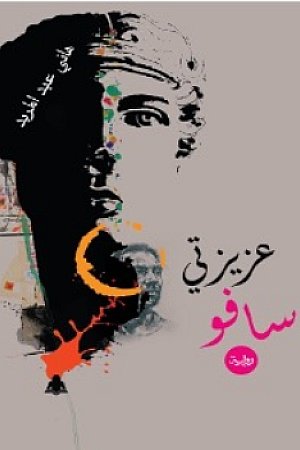
Overview
“But what Sappho said to me did not feel like a prophecy as much as it felt like sacred words. Her words carried a solemnity, as if spoken by a priestess or a sorceress. They touched my soul, mending something within me that I hadn't realized was broken until she fixed it. Her words didn't feel like ordinary words—they seemed like words specifically written for me, as if they scratched my memory, my skin, filling me with pleasure even as I melted away, my flesh dissolved, reaching the nerve, touching it directly.”
Summary
The novel My Dear Sappho by Egyptian writer Hani Abd El-Mourid is a unique narrative experience that blends meditation on the act of writing with explorations of identity, freedom, and truth. Belonging to the metafiction genre—or ‘a novel about the novel’—it intertwines personal stories with historical and philosophical dimensions in an intricate plot that challenges traditional narrative structures.
The story revolves around Khaled, a writer who leaves behind his father's legacy in the village to pursue self-realization through writing in the city. There, he faces a harsh reality when he meets Melissa, a publisher who seeks to exploit his talent to write a novel exonerating her grandfather, Barthelmeu Yenni, a historical figure known for collaborating with the French military campaign and executing Suleiman Al-Halabi. Khaled is torn between two choices: giving in to Melissa's demands and writing a fabricated historical narrative for money or sticking to his artistic principles in search of the ‘true novel’ that reflects his honesty and identity.
In an attempt to evade this dilemma, Khaled writes a conventional love story, which ironically becomes a commercial success, highlighting the paradox between genuine works of fiction and cheap ones. The narrator, whose voice skillfully merges with the story to become a character, guides Khaled to draw inspiration from his -autobiography and ancestral history. This guidance opens for multiple narrative possibilities, ranging from fake histories to authentic storytelling. The conflict between the "fake" and the "real" in writing forms the central axis of the plot, offering a critique of the publishing industry's influence on creativity.
The novel features a diverse cast of characters, each representing a different facet of this existential and artistic struggle. Khaled, the tormented young writer, grapples with writer's block and financial pressures, embodying the artist's search for authenticity in a materialistic world. His journey is one of self-discovery through honest writing and liberation from external and internal constraints. Melissa, the powerful and wealthy publisher, symbolizes the lower standards of writing, and represents authority that seeks to tame creativity for personal agendas. Her power lies in money, which she uses as a tool to control narratives.
In contrast, Sappho, the legendary Greek poetess, appears to Khaled as an ethereal and spiritual guide. She embodies ‘the freedom of text and the ability to express oneself and emotions,’ representing rebellion and art that transcends time. Her dialogues with Khaled showcase the novel's focus on art's sanctity and timelessness. The narrator is another pivotal character who breaks the novel's illusion by intervening to guide Khaled and reveal details to the reader, deepening the ‘novel within the novel’ concept. Other characters like Pola, the artist who remains loyal to his art till the end, symbolize the art that outlives the artist. Also, there are the marginal female figures like "Ashjan" and "Samira," who represent the oppressed social class, adding a societal dimension to the novel.
The novel employs a rich network of symbols that highlights the layered meanings laid within. Writing is the central symbol; it is not merely a profession or means of expression but an "existential act," a "lifeline," and a "love affair with self and others." It is a tool for liberation from constraints and fear, a quest for the soul and immortality. Sappho symbolizes timeless art and unfettered expression that rejects falsification or domestication. Her spectral presence represents eternal inspiration and the soul's echo in words. The tale of Barthelmeu Yenni symbolizes "fabricated history" and how narratives can reshape and distort the past, highlighting writing ethics and the importance of truth. Conversely, ancestors represent the richness of storytelling and heritage that inspires authentic narratives. The apartment building and its residents serve as a microcosm of Egyptian society, showcasing its diverse spectrum (like the Salafi sheikh, the pharmacist, and Al-Azhar family) and highlighting societal contrasts and internal conflicts. Writer's block symbolizes not just artistic crisis but existential dilemma and the search for self-realization in a complex world. Lastly, interwoven times and places (ancient Greece, contemporary Egypt, village, city) reflect fluid time and the deep influence of the past on present, consciousness, and identity.
In conclusion, My Dear Sappho is not merely a story; it is a profound study of the creative process itself and the writer's struggle with the self, society, and history. The novel asserts that true art is an act of freedom born from the soul and defies time to leave an everlasting mark through generations.
Why Read This Book
This novel is a profound contemplation on the nature of writing as an existential and liberating act. It chronicles the complex relationship between a writer and their work, revealing their challenges and tribulations, and how writing can be a lifeline and a path to self-realization. It also cleverly addresses the falsification of history, invoking worlds and characters from two different eras, which adds historical and philosophical depth to the work. It is a unique narrative experience that belongs to the "metafiction" genre, raising critical questions about freedom of expression and its constraints in contemporary cultural reality.
Key Themes
The act of writing and its crises
The novel examines the writer’s relationship with creativity and the search for inspiration amid publishing challenges.
Artistic freedom vs. censorship
Sappho represents the creative freedom that contrasts with Melissa’s attempts to weaponize creativity.
History vs. narrative
The novel addresses historical distortion and the conflict between "true" and "fabricated" storytelling.
Metafiction
The omniscient narrator disrupts traditional storytelling and resorts to layered narratives.
Identity and self-realization
The novel follows Khaled’s journey to authenticity through honest writing and liberation from constraints.
The immortality of art
Sappho and Pola’s art symbolize creativity that transcends time.
Sociocultural critique
Marginalized characters reflect societal struggles and cultural challenges in contemporary life.