
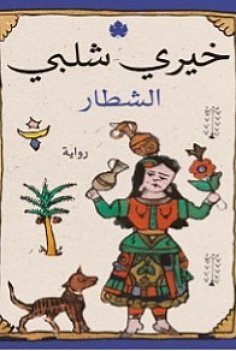
Khairi Shalab
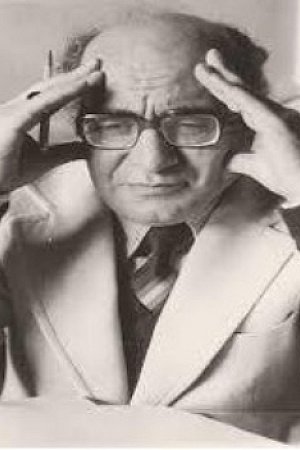
Khairi Shalabi, one of the greatest Arab novelists of the twentiethcentury, was born on January 31st, 1938, in the village of Shabas Amir in Kafr El-Sheikh Governorate, Egypt. He grew upin a pure rural environment that was the main source of his literary inspiration, where he learned from the daily details of simple rural life, and drew through it the features of his characters and stories. His personal experience, which combined reality with mythology, formed the nucleus of his literary project, which mixed Fantasia with magical realism. Khairi Shalabi was a multi-talented and prolific writer. He wrote over seventy books, including novels, story collections, plays, and literary criticism. He is famous for his novels that have provided a live image of Egyptian society, the marginalized, the poor, and the simple, and highlighting their issues, suffering, and hopes. Khairi Shalabi became, in the words of the writer Khalil al-Jizawi, “a unique and creative example in Arabic storytelling, a popular storyteller of a distinguished style, just like the village's rababa player.
” Shalabi used a distinctive narrative style based on a fun and interesting narrative that mixes realism and mythology, which made his works leave a long impact on the reader. In this context, the Lebanese novelist Abbas Baydoun wrote: “If there is a revolution in the Arabic fiction, it is the revolution of Khairi Shalabi.”
Shalabi's literary journey began with the collection of stories Siniora and Other Stories , in which he introduces his first features of his distinctive literary style. About this beginning, the critic Muhammad Al-Faris writes: “In the first stage, Khairi Shalabi proved himself a legend with his novel Siniora and Other Stories. He employed popular expressions, proverbs... diving into the elements and history of the heritage from the ancient Egyptians to today. This mixture relied on the elements of time and space - as well as on existentialism from an Arab-Islamic perspective”. With his novel Atiya’s Agency, Shalabi has gained wide fame, and for this novel he has received the Naguib Mahfouz Award from the American University in 2003, Cairo. In this novel, Shalabi presents a vivid picture of life in the Egyptian ghetto. The novel showcases Shalabi's narrative prowess and ability to add a human dimension to the characters, which made this novel his most prominent works. Khairi Shalabi's novels are characterized by real-life characters derived from the rural and urban Egyptian societies, and he masterfully portrays them in a smooth language that combines classicalism and colloquialism, which made his work appealing to the elite and ordinary reader at the same time. In this regard, Dr. Azouz Ismail argues that: “Naguib Mahfouz highlighted the heart of Cairo with its streets, alleys and cafes, while Khairi Shalabi highlighted the fringes of the city; the suburbs and villages. There are a number of features that are specific to his literature, and this makes him one of the best writers who were able to capture the pure spirit of the Egyptian countryside, the suffering, sense of injustice, the folklore, the endurance and tolerance for the life changes, as well as the myths in those places.
” Shalabi had a special interest in the lives of peasants and the working class, as he conveyed their suffering with injustice and oppression. This can be seen in the novel, The Wedge, which later became the subject of a successful television series. The Egyptian literary critic Alaa Abdel Moneim Ibrahim describes Shalabi as ‘the popular historian of the marginalized’ and that he is “a writer haunted by the popular spirit of the Egyptian character.This spirit rests on a rich legacy of oral and written narratives that succeed in combining the imaginary with the real narrowing down the distance between the mythical and the living to achieve that amazing fusion between laughing and sobbing. Thus, it brilliantly combines the dimensions of the impossible and the possible.”
Shalabi's contributions are not limited to fiction but extend to critical research. He conducts deep studies in folklore literature and theater. He discovered more than 200 missing theatrical texts from the nineteenth and early twentieth centuries, such as Mustafa Kamel's Fatah al-Andalus and Amin al-Khouli's Al-Rahib, and he contributed to reviving the Egyptian theatrical heritage and documenting important texts that were considered missing. In addition to his novelistic creativity, Shalabi was a prominent journalist who worked in many newspapers and magazines, including Al Ahram and Al-Usbuae. He was skilled in the art of portraiture, and he presented prominent figures from literature, art, and politics. He was one of the most distinguished journalists in Egypt and he had left a special impact on Egyptian journalism. Shalabi received many awards for his important contributions to Arabic literature. He won the State Incentive Award in Literature in 1981, the Best Arabic Novel Award for Atiya’s Agency in 1993, and the State Appreciation Award in Literature in 2005. He was also nominated by the Canadian Ambassador's Foundation for the Nobel Prize for Literature, and most of his novels were translated into: English, French, Russian, Chinese, Hebrew, and Italian. Despite Shalabi's success, he remained humble and attached to his rural roots. The village was always present in his works, reflecting its social, political, and economic transformations. His writings dealt with the impact of major transformations, such as the July 1952 revolution, on the lives of Egyptian peasants and villages. In his novel Gardens Mint, he depicts the changes that took place in the Egyptian village, documenting its transition from a simple agricultural society to one facing the challenges of modernization. Writer Ibrahim Aslan points out that Shalabi has a very strong memory and that he is “the owner of the harshest and richest experiences of our generation. In addition, he was raised on folk tales and knew a lot about the life of peasants and city dwellers.
” What also distinguishes Shalabi is his ability to address global humanitarianissues through simple characters, and to express human struggles with poverty, injustice, and corruption, while emphasizing noble human values such as dignity and solidarity. Shalabi realizes the narrative value of communication and influence, which is why he presents his characters in a charming style that makes the reader feel as if he is part of the world of the novel. Khairi Shalabi was not just a writer telling stories, but a human philosopher with a deep vision of life. In this regard, Dr. Amani Fouad wrote: “The observer of his works notes that there is an identification and communication between man and nature works; animals, things, values, the universe, and God... There are communicative relationships that flow between beings, suggesting an effective energy that creates a total entity, a metaphysical existence that disrupts physical entities, and denies the limits and restrictions imposed by the logic of naive mental clarity”. In his work, we find a careful analysis of social classes and cultural conflicts in Egypt, making them a rich source for understanding the history of Egyptian society and its transformations. On September 9th, 2011, and at the age of 73, Shalabi passed away, but he left an immortal literary legacy. His works are still widely read and are considered an important part of Arabic literature, thanks to his narrative prowess and his deep interest in the life of the marginalized.
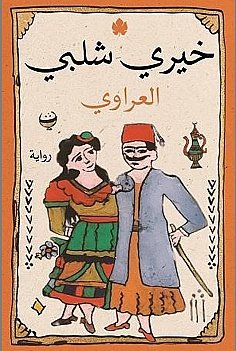
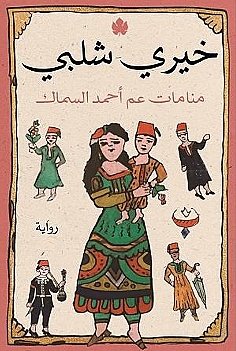
Books
Loading...
Awards & Recognition
No awards available for this author.