
The Cow’s Belly
Overview
“The Area of central Cairo, known in modern times as Al-Azbakiyah, was a swamp called the pond of the Cow's Belly, perhaps because its shape was close to the belly of a cow. This was before Prince Azbak Khazindar reconstructed and gave it his name: Al-Azbakiyah, which will become a wonderful tourist attraction surrounded by palaces, sidewalks, corniches, and lush gardens.”
Summary
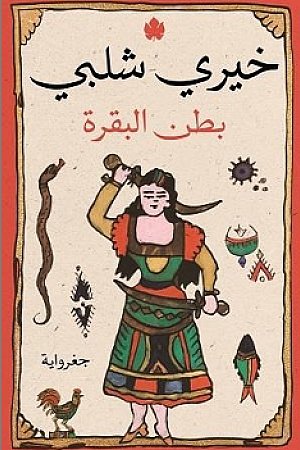
The Cow's Belly by Khairi Shelby is a unique fiction that combines history and geography in an innovative narrative template. Shalabi referred to this template “geo-novel,” as the place is the protagonist in the novel. He tackles the history of the three neighborhoods that make up the heart of old Cairo: Qaitbay neighborhood, Al-Bataliyah neighborhood, and Al-Azbakiya neighborhood.
Qaitbay neighborhood is surrounded by "Al- Mujwareen cemeteries" in the Mamluk desert, where the living co-exist with the dead, houses and cemeteries overlap, and its residents coexist with the spirits who sometimes reach out at times to help and other times for punishment. Shalabi shows how the neighborhood cemeteries have turned into drug joints, adding an exciting dimension to the deep-rooted neighborhood. Al- Balaliyah emerges as a neighborhood that embraces cannabis auctions and endless secrets about popular life, where the writer brilliantly details the daily life in its alleys and the stories of the residents. Al-Azakaya is the most famous neighborhood among the three. It has a rich history, gardens, and palaces where the insane and the amorous live side by side. In this work, Naguib Mahfouz’s character appears confronting a French general at the opera casino, while women are protesting social restrictions.
This is not just a tale with characters and events, but a generational journey between the fourteenth and eighteenth centuries. The writer relies on a wide range of historical sources, such as Al-Megrezi's plans; Ibn Taghri's The Bright Stars; The Annals of Al-Jabarti; Ibn Al-Tuwair's Al-Maqlatain Nizha; Ibn Eyas' Badaae Al- Zuhor; Ali Mubarak's The Conciliatory Plans and Muhammad Sayyid Kilani's Azbakiyya Quarters.
In the novel, Shalabi repeats his famous saying, “Nothing is lost in Egypt,” emphasizing that these neighborhoods are the nation's memory despite the attempts to obliterate them. The writer recounts a painful incident about the destruction of large and small villages while paving the highway. He saw the old bones scattered, which prompted him and his friends to gather them and bury them out of respect for the dead.
The Cow's Belly is not only a journey through geography and history, but a testament to the genius of ancient Cairo and the charm of its neighborhoods. Khairi Shalabi, who lived in this city for years, knew it by heart and had fallen in love with it, succeeded in translating this love into a tale and keeping its memory.
Why Read This Book
The Cow's Belly is a unique historical novel that blends geography and history to explore the rich history of three neighborhoods in old Cairo. Drawing on historical sources and personal experiences, Shalabi creates a vibrant tapestry of life in these areas, highlighting their social, cultural, and political evolution. The novel celebrates the enduring power of place and the importance of preserving historical memory, making it a compelling read for those interested in urban landscapes.
Key Themes
The Interconnectedness of Past and Present
The novel emphasizes how the past continues to shape the present, exploring the enduring legacy of historical events and figures on the lives of contemporary inhabitants.
The Importance of Place
The Cow's Belly highlights the significance of place in shaping identity and community.
The Historical Memory
Shalabi emphasizes the importance of preserving historical memory, arguing that the past holds valuable lessons for the present. He highlights the dangers of forgetting the past and the importance of preserving cultural heritage
Social and Cultural Dynamics
The novel delves into the social and cultural dynamics of the neighborhoods, exploring the relationships between different communities, the role of tradition and modernity, and the changing social landscape of Cairo.