
Garden Mint
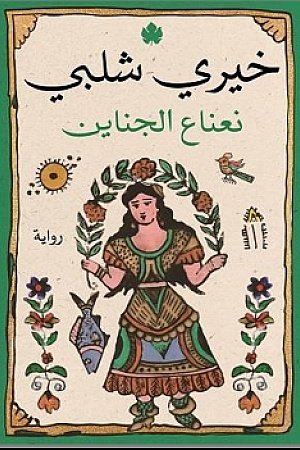
Overview
“It turns out that we're not qualified to keep any history.”
Summary
Goddam the history I must protect, and it does not protect me and oblige me to be a life-long keeper. Such history hunts me in my sleep. Whenever I look at it, I feel small, and when I open my closet, I find it there sneering at my reaching hand, lest my hand bites. I find myself terrified by the envy over having it and the malicious souls seeking to steal it. As long as we have the box, the devil is in our house, and all our children will be killed over it”.
Garden Mint is a distinctive journey deep into the Egyptian countryside and the life of Al-Wasiyah oppressed peasants and their social and economic conditions before and after the July 1952 revolution. The novel begins in the mid-1940s and uses a first- person narrator, giving the reader a sense of being part of history.
The story takes place in the village of Al- Dabaa in Kafr al-Sheikh. The writer exposes the oppression of peasants in Al- Wasiyah at the hands of princes of the ruling family. This family exploits immigrant workers and labourer who lived in inhumane conditions until the revolution changed their lives. The novel documents that pivotal moment when the land was distributed to the peasants after tumbling the feudal system and establishing a more just system. The characters in the novel reflect the essence of space and time during that period, and the contradictions of life in the countryside, where the writer details the people's concerns and joys in a society moving into liberation.
The narrative style in the novel is a combination of live scenery and simple and concise language. The stories come in short chapters and their titles are the names of characters such as ‘Hajjah Zahra’, ‘Hamada Al-Khuraiji’, and ‘Sheikh Arafat Al-Tarbi’. In each chapter, the writer introduces a new character, explaining its external and internal characteristics through intense and detailed scenes. These characters are not just novel elements, but part of a vibrant painting, where you feel as if you are moving between the houses of the village, and hearing stories straight from people’s mouths. The novel adopts a suggestive poetic language, combining classicism and colloquialism which makes the text vital and attractive, such as the scenes of the family meeting Grandpa Hassan on the sea terrace, where the writer depicts moments of nostalgia in its three dimensions: movement, smell, and image.
Khairi Shalabi succeeded in making his novel a mirror that reflects the Egyptian ghetto, with all its fragility, cruelty, and beauty, thus restoring the art of popular storytelling. Through his unique characters and coherent plot, the writer shows an exceptional ability to touch the reader's feelings and explore the depths of a memory. The novel is not only a testimony to the struggle of the Egyptian rural society, but a human history, a mixture of both fiction and reality, that makes the reader part of a unique experience that is difficult to forget.
Why Read This Book
The Garden Mint is a poignant historical novel that explores the lives of Egyptian peasants before and after the 1952 revolution. Told through the eyes of a first- person narrator, the novel offers a vivid and intimate portrait of rural life, capturing the struggles, joys, and hopes of the villagers.
Key Themes
Social and Political Change
The novel explores the profound social and political changes that occurred in Egypt following the 1952 revolution, particularly focusing on the impact of land reform on the lives of peasants.
Social Justice and Equality
The novel explores themes of social justice and equality, highlighting the struggle for land rights and the fight against oppression and exploitation.
Memory and History
The novel explores the importance of memory and history, highlighting the impact of the past on the present and the importance of preserving historical memory. The characters in the novel grapple with the past, reflecting on their experiences and the legacy of the revolution.