
The Shrewds
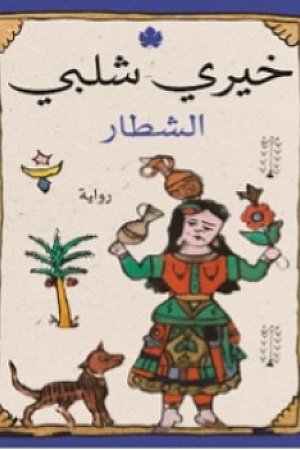
Overview
“True Birth is not descending from the mother's womb, but the beginning of the awarenessoftheplaceintheplace.”
Summary
The Shrewds is one of the masterpieces of the Egyptian storyteller and novelist Khairi Shalabi, who is one of the pioneers of the Arab magical realism. Throughout the novel, Shalabi reflects a true image of Egyptian society and delves deep into its social and political contradictions. This unconventional work is not only a symbolic epic but a dark satire on the reality of most of Arab peoples.
The protagonist is a dog abandoned by its owner and hopelessly roams the neighborhoods and whereabouts of Al-Azraqia which is not just a place but a symbol of the Egyptian state that works on alienating the collective awareness in various forms. Shalabi humanizes the dog and gives it the ability to speak, and therefore the reader knows about the dog's suffering from human treachery and injustice when humans killed his mother when it was a puppy. Thus, hatred for them grew, and people were seen as hostile beings. The dog calls these people Al-Azraqians amed after a group in a popular book about heroes and knights narrated in cafes. On the symbolic level, this dog represents the Arab people and their dire condition. It is a symbol of their subjugation and marginalization under dictatorships.
The novel opens with the finale of the events. The dog narrates what happened to it after losing its owner, and then it goes back in time to tell the story of its owner, Kakouh, who was selling drugs in Cairo's popular neighborhoods. The dog describes the contradictory nature of its owner. On the one hand, Kakouh is an educated and avid reader, and on the other hand, he consumes alcohol and drugs. The plot revolves around the rise of drug use and dealing in Egyptian society, and the control of the corrupt traders over the drug joints in the country. Hence, the title of the novel can be understood. The shrewds refer to thieves and fraudsters. In addition to the drug problem, the novel also highlights the epidemic of beggars who took begging as a craft, and how some exploit it for money and drug dealing.
In The Shrewds , Shalabi makes a bold criticism of corruption, and talks about the involvement of senior officials, artists, and journalists in illegal trade, and the way public awareness is manipulated through cheap art and sensational journalism. The novel also reveals the oppression of the poor to themselves which is manifested in religious fanaticism and hunger for money and power. It can be said that the novel is not only a melting pot of conflicts and contradictions but also of all the reasons for revolting against the oppressor.
Once again, Shalabi proves himself to be a unique storyteller in the way he skillfully maneuvers between the past and the present, controlling the rhythm of events, not only that, but he excels in weaving new characters throughout the work, as we see them enter, contribute to the course of events, and then exit leaving the reader puzzled but intrigued.
Why Read This Book
Shalabi's The Shrewds is a dark satirical novel about Egyptian society, told from the perspective of an abandoned dog. This unique narrative explores themes of corruption, oppression, and the alienation of the individual within a broken system. Through the dog's eyes, Shalabi offers a harsh critique of political realities and human condition, making it a compelling and thought-provoking read.
Key Themes
Social and Political Critique
The novel offers a scathing commentary on Egyptian society, exposing corruption, injustice, and the erosion of collective awareness. It highlights the plight of the marginalized and the impact of political oppression on individuals.
Alienation and Marginalization
The dog protagonist experiences profound alienation from human society, mirroring the experiences of marginalized groups within Egyptian society. This theme explores the impact of social and political structures on individual identity and belonging.
Corruption and Exploitation
The novel delves into the pervasive nature of corruption within Egyptian society, depicting how it affects all levels, from street-level drug dealing to the involvement of high-ranking officials.