
Vanilla
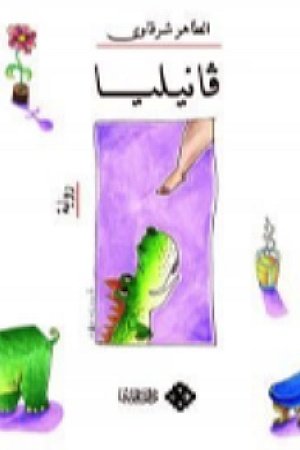
Overview
“In the morning, there was a heart-shaped cloud covering the sky. It was heavy with rain, and from it hung pale pink nipples, dripping a few drops that carried the same scent as the girl's body—drops infused with the fragrance of vanilla. He received them in his mouth, slowly and with pleasure, and they soon turned into streams of water. A tranquility unlike anything the city had ever known spread all around.”
Summary
Altahir Sharqawi’s Vanilla represents a unique narrative experiment in both its structure and language, as well as in its approach to reality. The novel does not follow a classical plot or a traditional narrative structure; instead, it relies on fragmented events and the intensification of moments. It is built as a series of narrative tableaux where voices and small details alternate, forming a sensorial and poetic narrative. The novel follows the story of a nameless girl who moves from a coastal city to the capital in a bold attempt to be independent and escape the familial authority and the constraints of society. She moves between temporary apartments, carrying with her personal belongings like a couch and dolls, in a constant effort to preserve traces of her private world in a city that rejects stability and tempts with confusion.
The girl appears eccentric; she walks barefoot in the streets, imagines mythical creatures living with her, and keeps childish items in her drawers like baby teeth and colorful buttons. She dreams of becoming a flower, a tree, or a black wolf. These small details accumulate throughout the text to create a complex character, one that simultaneously reflects innocence and alienation, the desire for life and a tendency to withdraw from it, poetic sensitivity and the recklessness of loss. She is mirrored by the “boy,” an elusive character, observant and captivated by the girl’s world, obsessed with all things small to the point of sadistically wishing to preserve her tiny feet. Their relationship reflects a tense internal dialogue, where identification, infatuation, and separation unfold all at once.
The novel is less concerned with dramatic escalation than it is with diving inward—into obsessions, desires, and dreams—focusing on the everyday details of life, which becomes a language in itself. The absence of names for the main characters is a part of the text’s semantic structure, shifting the reader from the specific to the universal, from the individual to the experiential. The narration thus becomes an extended meditation on the human self as it faces its fragility and reconciles with its strangeness. Symbolism in Vanilla is rich and distributed throughout the narrative fabric: the small foot symbolizes the childhood root of the self; the dinosaur represents fantasy as a tool for survival; and the scent of vanilla alludes to innocence, memory, and loss.
The novel ends with the heroine transforming into a cloud that rains from her nipples, in a mythical scene announcing the complete dissolution of the self into the world and the extinguishing of the narrative flame after it has reached its sensory peak. The characters that appear in the final “appendices”—from the reminiscing old woman to the funeral man, to the woman whose fingers turned into clothespins—confirm the novel’s bias toward the marginal, not only as characters but as rejected or forgotten aesthetic and epistemological values.
Vanilla is a work that approaches dream as much as it approaches confession. It celebrates the marginal, the forgotten beauty, the inner sensation, and claims the power of narrative language to capture the intangible: emotion, moment, desire, and emptiness. It is a new kind of writing, as novelist Jamal El-Ghitani described, that does not approach major issues but rather pay attention to the small details as they are the manifestation of our true selves
Why Read This Book
Vanilla is a unique narrative that skillfully blends realism and fantasy, offering a complex portrayal of identity and the feminine experience in an urban setting. Its heroine challenges traditions in her quest for freedom, using simple yet poetic language that hides deep tension. The novel features scattered narrative tableaux and symbolic characters, exploring themes of childhood, yearning, and urban transformation.
Key Themes
Identity crisis
The heroine's journey challenges traditions and societal constraints in her quest to find her place and identity in the city.
Magical realism and fantasy
The novel blends the daily life with fantastical elements such as the small dinosaur and daydreams in a unique narrative world.
Freedom and liberation
The heroine seeks to break free from social and familial constraints, expressing herself in unconventional ways.
Loneliness and nostalgia
The novel captures states of solitude and longing for the past or for moments of purity.
Symbolism
The novel is rich in symbols and recurring motifs such as the small foot, the scent of vanilla, and the city, all serving to amplify its meaning and emotional impact.
Social Critique
The novel subtly critiques rigid traditions and societal restrictions, particularly those imposed on women.