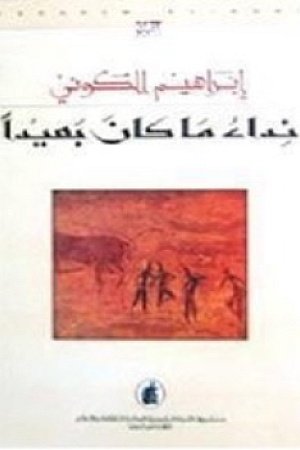
The Ancestors and Successors Hexagon - Part I: The Call of What Was Far Away
Overview
The Ancestors and Successors Hexagon is an epic saga chronicling the rise and fall of the Al- Qaramanli dynasty in 18th and 19th-century Libya. Through six parts, Al-Koni masterfully blends history with mythology and philosophy, exploring themes of power, freedom, and the human condition. He traces the history of five generations of the Al-Qaramanli family, who ruled Libya for over a century and a quarter (1711-1835) and explores the tension between two powerful forces: the freedom rooted in the desert's norm of abandonment and travel, and the allure of stability, which promises power, wealth, and women. As academic researcher Mustafa Salim notes, “Al- Koni has shifted the scene of events, moving from the desert to the sea after thoroughly mythologizing and interpreting the former. With this hexagon, he has moved beyond the myths of the desert and entered the gates of the city.”Al-Koni's Ancestors and Successors Hexagoncomprises six parts:• The Call of What Was Far Away• A Place We Live In... A Time Lives in Us• Jacob and His Sons• Cain... Where is Your Brother, Abel?• Youssef Without His Brothers• Southwest of Troy... Southeast of Carthage. For this part of the hexagon, Al-Koni was awarded the Sheikh Zayed Book Award for Fiction (2007- 2008).
Summary
"God is in freedom… and freedom is in travel."
In The Call of What Was Far Away, Al-Koni returns to the desert, a place where everything is either a gift or a curse—or both. The novel shines a light on the story of Sultan Ahmed Al-Qaramanli, ruler of Tripoli for over a third of a century. It highlights his political wisdom in dealing with the French, his persistent efforts to gain independence from the Ottoman Empire, and his resistance to Turkish control over Tripoli. For Sultan Ahmed, Tripoli should be ruled by a Tripoli leader. As a shrewd commander and strategist, he believes that kindness often invites treason and betrayal. His final words on his death bed encapsulate the wisdom of the great desert: “If you take a weapon, use it, and if you use it, you must use it well. This is the wisdom of your mother, the desert!”
The novel's protagonists are constantly confronted by destiny’s messages, which play a crucial role in shaping their lives and fates. Their struggle to comprehend and use these messages to their advantage forms a central theme of the story. Al-Koni excels at crafting a strange and untamed world—one where the real and the imaginative intersect, where human nature is laid bare, and where ancient pagan beliefs persist beneath a thin veil of Islam.
What stands out in this novel is Al-Koni’s exploration of the psyche of desert people. They avoid the scent of the sea like a plague and fear the life of settling down, which they call the “tomb life” of coastal dwellers. For them, the desert is not just a homeland; it is the cradle of their free spirits. They can endure any form of injustice except the one that chains their freedom. To preserve this freedom, they are even willing to abandon their children, leaving them to the mercy of invaders, believing that offspring only bring ingratitude. In this vein, Mustafa Salim writes: “Al-Koni builds the epic around the conflict between the freedom that embraces imagination and travel—a sacred legacy inherited by both the desert and the sea—and the temptations of power, which he calls 'the sin of stability’. Al-Koni draws inspiration from the figure of Ahmed Al-Qaramanli, whose father’s lineage ties him to the sea, and his mother’s to the desert. Through Ahmed and his heirs, Al-Koni reflects the dramatic tension between power and freedom, exposing the illusions and sins of power that led them to either suicide or homelessness in the streets and alleys of Tripoli. He champions freedom as a commandment, a religion for both the desert and the sea, in contrast to the shackles of power and its limitations. This dialectic drama shapes the lives of five generations of the Al-Qaramanli family”.
Why Read This Book
Through vivid storytelling and deep historical insight, this series offers the reader a journey through the rich tapestry of 18th and 19th-century Libya, a world shaped by the rise and fall of the Al-Qaramanli dynasty, highlighting the intricate interplay of power, politics, and cultural values. Also, the reader is in for a deep dive into the philosophical depths of human existence, freedom, identity, and the captivating charm of the desert. The series brilliantly sheds a light on the stark contrast between the nomadic lifestyle and the emerging urban centers and witness the impact of Western influence on traditional Tuareg culture.
Key Themes
The Clash of Civilizations
The series explores the tension between the traditional nomadic lifestyle of the Tuareg and the modernizing influences of Western culture. It tackles the challenges faced by the Al- Qaramanli dynasty as they navigate the complexities of a changing world.
The Nature of Power
Al-Koni examines the corrupting influence of power and the human desire for control. The series explores the political intrigues, alliances, and betrayals that shape the destiny of the Al- Qaramanli dynasty.
The Human Condition
The novels delve into the universal themes of love, loss, ambition, and the search for meaning. The characters are complex and multifaceted, grappling with the challenges of power, morality, and identity.
The Power of Storytelling
Al-Koni's masterful storytelling brings the past to life, transporting readers to a bygone era. Through vivid descriptions, insightful characterizations, and philosophical reflections, the author creates a rich and immersive reading experience.