
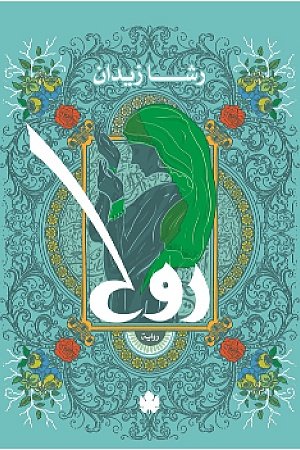
Ruh
Overview
“Love needs a limitless and vast space, not to be confined within a chest... These are principles of releasing the spirit in God's kingdom, free from the transient worldly restrictions.”
Summary
Ruh presents a fictional tale where the realistic and the spiritual intersect, and human relationships intertwine with profound questions about the self. The plot unfolds gradually, driven by fleeting encounters and situations that leave a lasting impact on the characters’ lives.
The novel begins with Rasha who is searching for the meaning of love and a spiritual mentor until she meets a unique character named Ruh, a free-spirited and pure woman who recounts her experience of liberating herself from societal constraints and journeying toward God through love. Through her encounters with Ruh and her friends, Baraa and Nour, Rasha enters a new world of contemplation on freedom, faith, and inner beauty. The relationship between Rasha and Ruh evolves into a deep spiritual friendship, as Rasha documents Ruh's steps and her experience with the great love that united her with Nour, a love the novel describes as 'guarded by angels.' The dialogues between the characters reveal profound questions about the meaning of love, surrender, and the heart's role in battling the mind. In the end, Rasha realizes that her destiny is to write this story not as a fleeting romantic tale, but as an existential one about absolute love, freedom, and the search for God.
In this work, Zidan draws inspiration from Elif Shafak's Forty Rules of Love in its Sufi and the spiritual philosophy of the experience of Jalal al-Din al-Rumi and Shams Al-Tabrizi. Both works are based on the master-disciple duality, but Ruh re-frames it for a modern era, where 'Shams' can be anyone sent by destiny to be a guide. Both texts share the value of surrender and certainty, with the difference that Ruh emphasizes that God is the source of inspiration. The novel's language tends to blend classical Arabic with Egyptian colloquialism, which in turn reflects the intimacy of the dialogue and the sincerity of emotional expression. This blend gives the text warmth and closeness to the reader, enhancing the internal rhythm of the scenes, especially those with high emotional or spiritual charge.
With these elements, Ruh offers a text that belongs to the contemporary, contemplative novel genre, where the plot does not rely on traditional suspense as much as it does on slow transformations in consciousness, the internal growth of characters, and the intertwining of realistic dialogues with the spiritual quest. This is what makes it a literary work that combines narration with testimony, and story with philosophical discourse.
Why Read This Book
Ruh is a compelling read because it combines a journey of self-discovery with spiritual and philosophical dimensions. By drawing on the relationship between Rumi and Shams Al-Tabrizi, the book uses a real-world connection to delve into deep questions about freedom, love, and the meaning of life, making it a powerful and thought-provoking experience.
Key Themes
The spiritual journey
The novel explores the protagonist's journey to liberate herself from the constraints of the self and society, inspired by the experience of Jalal al-Din Rumi and Shams Al-Tabrizi.
Master-disciple relationship
The novel addresses the relationship between the spiritual master and the disciple, and how fate could send anyone as a master.
Blending the realistic and the spiritual
The novel approaches daily life with spiritual philosophy, which gives the Sufi experience a personal and contemporary character.