
It is You
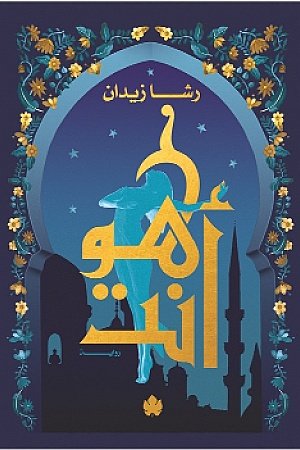
Overview
“Now it's time to part! — Forgive me for loving you so strongly. — Thank you for loving me with such beauty.”
Summary
It is You is the third part of the Ruh Trilogy, where the author leads us to the conclusion of the heroine’s journey, weaving a tale with an ending tat is intimate and penetrates the soul. In this part, the narrative reveals a profound emotional and spiritual experience, interwoven with poetic language and Sufi symbols, where the beloved becomes a symbol, love a path, and loss a means of uniting with the highest meaning of existence.
The story continues with Ruh’s relationship with Nour, her lover and spiritual guide, where their love appears as something transcendent that goes beyond the body to become a path to discovering God and experiencing His presence.
The events unfold between Konya - the city of Jalal Al-Din al-Rumi- and imagined spiritual realms, as the heroine immerses herself in visions, dreams, and encounters with sheikhs and mystics, exchanging signs and symbols that reinforce her conviction that love is her way to God. Ruh lives through a profound inner struggle between her human desire to draw closer to Nour and her realization that their bond is bound by divine laws and a destiny greater than their will. This conflict infuses the text with emotional and spiritual tension, turning the heroine’s journey into a psychological and contemplative quest rather than a sequence of conventional events.
The novel unfolds through extended dialogues between Ruh and Nour, or between her and her spiritual mentors and friends, raising questions about love, dissolution in the other, spiritual freedom, and the meaning of beauty. Through these dialogues, the text becomes a mirror revealing the inner self more than recording the outer world. The novel concludes with the rhythm of parting interwoven with spiritual union: even if Nour is absent physically, “It is You”—that is, God—remains the eternal presence manifested through every face, completing the heroine’s journey toward surrender and divine love.
In this part, Zidan continues her distinctive lyrical style, charged with pure emotional resonance, leaning toward poetic rhythm and dense metaphorical imagery, with a clear tendency toward direct confession that borders on autobiographical writing. She employs short, sharp sentences at times to convey intense emotions, and long, flowing ones at other times to reflect immersion in contemplative or emotional states. This rhythmic fluctuation parallels the movement of the narrative between tension and release, between loss and hope. The novel is full of recurring images carrying emotional and spiritual weight—light and shadow, the sea, mirrors, and roads—each turning into signs of the characters’ inner states or the transformations they undergo. The title itself carries a dense symbolic layer: it reflects the unity of identity between the speaker and the addressee, the merging of the self into the other, and perhaps suggests that the search for the beloved is, in essence, a search for the self.
Why Read This Book
This novel offers a unique reading experience because it focuses on the inner emotional journey, transforming everyday details into a window onto deeper dimensions of human existence. The novel features a plot that is simple on the outside but complex on the inside, where timelines and narrative levels intertwine to form a profound psychological journey.
Key Themes
Spiritual love
The novel revolves around a love experience that transcends the boundaries of admiration or attraction to become a spiritual fusion between the beloved and the lover.
Searching for the self through the other:
The novel presents the idea that the beloved is not only a subject of love but also a means of discovering the self and understanding its depths.
Time and nostalgia
The work highlights the role of memory, which gives the text a contemplative character and makes the present saturated with echoes of the past and dreams of the future.
The power of the word
There is a focus on the effect of the word in love and life, as it is capable of building and destroying.