
Hallucinations
Overview
“Here I am, mind and body, returning to the place where the idea was conceived. Here I am, searching for it on billboards... on the pavement... in the random melody I hummed, to the surprise of passersby... between the green buses, among which Yahya's physical embodiment appeared at that moment.”
Summary
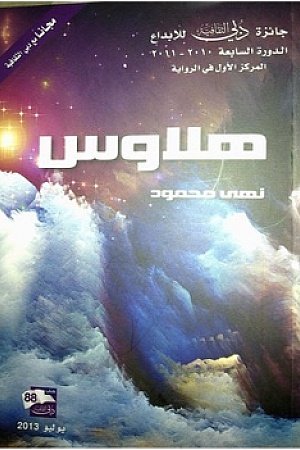
Nuha Mahmoud’s Hallucinations is a profound literary work that delves into the complex worlds of the self, employing a unique narrative style that blends daily life and philosophical reflections. The novel's style is characterized by its free flow, as the author seamlessly transitions between reality and imagination, memories and thoughts, creating a non-linear narrative that reflects the protagonist's fragmented consciousness. This intertwining of times and places, and the shifting between narrative ‘flashes’, gives the reader a sense of immersion in the stream of consciousness of the central character. The novel has won first place in the novel category at the seventh session of the Dubai Creativity Award (2010-2011).
The plot in Hallucinations relies more on internal construction than on the external development of events. Instead of a traditional plot with a climax and resolution, the novel presents a series of meditations and situations that reveal the protagonist's psychological state. The story follows a young woman who lives in isolation and self-withdrawal, resorting to worlds of hallucination, memory, dreams, and books as an escape from reality. The boundaries between her reality and imagination intertwine, and her psychological suffering is embodied in daily and internal scenes that intersect with childhood memories, the pain of loss, emotional frustrations, and her struggle with her body and the surrounding world. Emotional betrayal emerges as a central element, with the protagonist remaining captive to a lost love from which she cannot recover. Meanwhile, writing and reading serve as means of resisting spiritual and mental loss. The narrator experiences a state of isolation that turns involuntary, revealing a psychological disorder manifested in her perception of time, sleep, and relationships.
The characters are intense and symbolic rather than multi-dimensional in the traditional sense. The protagonist is the main axis, a first-person narrator, struggling with feelings of loneliness, sadness, and the search for love. Other characters, such as the mother, friends, and even the men who passed through her life, appear as specters or reflections of her complex relationships with the world. Yahya's character, in particular, takes on a deep symbolic dimension, representing lost love, a haunting obsession that never leaves the protagonist, and at the same time, her companion on self-discovery journey.
The language in the novel is deep and poetic, despite its apparent simplicity. The author uses precise vocabulary and intense expressions to describe complex emotions, making the text overflow with sensory images and metaphors. The language is characterized by its ability to lend a symbolic character to everyday details, transforming them into deep connotations that reflect the protagonist's inner worlds. A contemplative and often melancholic tone dominates the narration, highlighting the psychological nature of the work.
Symbolism is one of the most prominent features of the novel, dominating every aspect of the text; sorrow becomes a material entity that devours the soul; smoking in the bathroom and in bed symbolizes gradual liberation from constraints, and at the same time, immersion in a state of isolation and illusion; the 'House of Ghosts' is not just a place, but a symbol of the protagonist's inner world, where memories wander and thoughts materialize; cats symbolize companionship in loneliness, while sedatives reflect an attempt to escape pain; the broken tooth that turns into pale blue symbolizes the hidden death within her, and the fragility of the body in the face of psychological shocks; 'witches' represent women's self-discovery in the face of world's cruelty. The novel is rich in sensory images that transform into symbols, such as the smell of Dettol, the smell of death, or even the colors with which the protagonist describes her psychological state. All these symbols combine to create a multi-layered fictional world, inviting the reader to reflect on the nature of existence, memory, human relationships, reality and imagination.
Why Read This Book
Hallucinations is a compelling read because it offers a deep dive into the self through a distinctive narrative that blurs the lines between reality and imagination, presenting the protagonist's profound psychological journey. Its non-linear plot, rich poetic language, and pervasive symbolism invite readers to explore loneliness, emotional loss, and liberation, making it ideal for those who appreciate introspective works that challenge conventional storytelling and offer a multi-layered reflection on existence and human relationships.
Key Themes
The self and fragmented consciousness
The novel is a deep exploration of the protagonist's psychological state, and the intertwining of reality with imagination.
Loneliness and isolation
The work explores the protagonist's suffering from loneliness, and her attempts to deal with it or escape from it.
Love and loss
The novel casts a light on the impact of failed love stories and loss on the protagonist's life and her feelings of sadness.
Liberation and rebellion
The protagonist's desire to break free from social and psychological constraints, and to express herself.
Writing as salvation
There is a focus on the role of writing in the protagonist's life as a means of healing, understanding, and re-shaping painful reality.