
Bari: Sudan’s Song
Overview
“They say that the difference between war and love is a single letter, and both are equally bad, for war, like love, takes souls and with the both of them pains grow.”
Summary
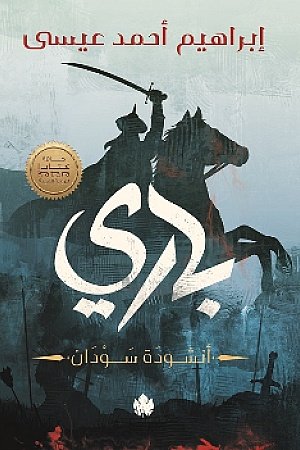
Bari: Sudan’s Song is an exceptional literary work that blends traditional historical narrative with a complex mix of reality and fiction. As the author has noted, only five percent of the novel is based on true historical events, while the remaining is mere fictional storytelling. This unique approach positions the novel among literary works that use history as a foundation to explore deeper ideas. Although it may not have received sufficient critical or media attention, this work is a compelling invitation to explore a forgotten historical era and reflect on human and civilizational issues that continue to resonate in our contemporary reality.
The novel opens with what seems like an ordinary hunting trip but quickly evolves into a tale about the fate of a nation. It follows Sultan Sudan Al-Mawri, the sultan of Bari, an Islmic emirate in Italy, and a Christian girl in a love affair that challenges the limitations of their two different worlds. This emotional relationship is not merely a subplot, but it serves as the central axis around which human conflicts intensify, illuminating the diverse and richly detailed characters created by the author. Issa excels at navigating the landscapes of Bari and Naples, painting a vivid picture of two neighboring and warring worlds—Muslim and Christian—and depicting fierce wars that claim many lives. The novel's structure is not linear but rather a narrative mosaic that unfolds gradually, revealing the secrets of the past with skill. This approach captivates the readers and immerses them in a beautiful dilemma while exploring this often-overlooked history.
Issa demonstrates remarkable literary ability in his use of language and style. He employs a sincere and captivating language that is void of any exaggeration. This kind of language is not only a means of narrating events but also as a crucial element in constructing the novel's world, element in constructing the novel's world, lending it an aura of greatness and majesty. The author's commitment is evident in his ability to bring the atmosphere of the era to life through precise descriptions of various scenes, whether they are battles or intimate moments.
Bari: Sudan’s Song is a significant addition to the Arabic novel, particularly with its focus on history. Similar to novelists like Amin Maalouf and Youssef Zaidan, Issa successfully navigates the challenge of using history as a foundation for a novel that combines imaginative storytelling with entertainment. The novel has won the Katara Prize for Arabic Novel in 2018.
Why Read This Book
This novel is an epic tale of love and war set in a poorly documented era. It goes beyond being just a historical narrative; it is a literary work that skillfully combines imagination and reality. This blend offers readers a chance to explore profound civilizational issues, such as fanaticism. Ultimately, it demonstrates how human experience transcends the boundaries of time and place.Clash of civilizations: The novel deals with the conflict between two different worlds, the Islamic and the Christian, and how coexistence can grow even in the midst of hostility.
Key Themes
Clash of civilizations
The novel deals with the conflict between two different worlds, the Islamic and the Christian, and how coexistence can grow even in the midst of hostility.
Love and sacrifice
The novel shows how love can overcome all barriers, whether religious or cultural, and how it can lead to sacrifice for the other.
Forgotten history
The novel sheds light on a historical period unknown to many, which is the period of the Islamic rule in Bari.
Power and authority
The novel addresses authority and its impact on individuals and societies, through the character of Sultan Sudan.