
Banu Al-Azraq
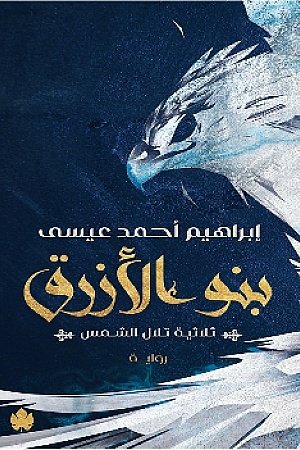
Overview
“He will do as he pleases and they will obey his command, for leadership is seized, not given. That is what he has learned, and to carry on the journey of life, he must trust what he is capable of doing.”
Summary
In Banu Al-Azraq the scope of events in this trilogy broadens and the characters become more complex, reaching an epic level. The premise of the story is no longer confined to Kafr Al-Bardaqoush and the Sea of Sand; it now includes the pagan kingdom of Banu Al-Azraq. This expansion enriches the narrative environment, adding a new geographical and civilizational dimension. Moreover, this growth is not merely a spatial one; it is integral to a more intricate plot where the fates of new characters intertwine with those of the original ones amid a backdrop of wars and conflicts that threaten to tear the world apart.
The plot in this part is intelligently structured, as the author chooses to start from a completely new location and with new characters, where the fates of different individuals intertwine in a cruel world full of conflicts. The novel's heroes, such as Shaheen and his wolf, Dahab, face new challenges that involve betrayal and battles, and they discover more secrets about their mysterious past. The political conflicts escalate and expand to include mythical dimensions, where reality blends with imagination in a world that fuses human and wolf.
On the language front, the author maintains his distinctive style; the prose is neither overly complex nor overly simple, but rather concise and accessible, which makes for an enjoyable and smooth reading experience. The author has a unique approach to opening most of his novels, which serves as a stylistic hallmark that allows readers to recognize his work from the very first line.
In Banu al-Azraq, the author continues with his distinctive, easy, and solid language, which makes the reading experience smooth and enjoyable. His style is characterized by presenting characters convincingly and in a way that serves the story, whether they are new or old. Issa goes beyond direct narration to rely on symbolism, where Banu al-Azraq is no longer just a place, but a symbol of the conflict between faith and paganism, just as the character of "Prophet Inal" becomes a symbol of intellectual transformation. This attention to characters, the expansion of the novel's world, the multiplicity of the plot, and the use of symbolism gives the work a philosophical depth and confirms the author's maturity and his ability to create a comprehensive fictional world.
Why Read This Book
This book takes us on a journey through a vast and complex epic world, featuring deep characters who struggle with their destinies amidst great wars and significant transformations. It illustrates how literature can revive forgotten histories while prompting us to reflect on key issues such as the struggle for power, identity, and the role of individuals in shaping the course of history.
Key Themes
Power struggle
The novel shows how individuals struggle for control, and how this struggle changes the course of history.
Identity
The novel deals with the concept of identity, whether personal or collective, and how it is formed and changes during wars and turmoil.
The role of individuals in history
The novel suggests that individuals, even if they are part of an epic story, can influence the course of events.
Reviving forgotten history
The novel sheds light on unknown historical periods, which contributes to bringing back a history that has been forgotten.